
Introduction
Mobile shopping is growing very fast. Many people now buy products using only their phones. Because of this change, brands must think differently about their online stores. This is where Headless commerce for mobile first brands becomes very important.
Traditional online stores are often slow and hard to change. They were not built for mobile users first. But today, speed, flexibility, and smooth mobile experience matter the most. Headless commerce for mobile first brands helps businesses create fast and modern shopping experiences without limits.
In this article, you will learn what headless commerce is, why it is useful, and how mobile first brands can benefit from it. Everything is explained in simple words so anyone can understand.
What Is Headless Commerce
A contemporary approach to creating internet storefronts is headless commerce. To put it simply, it divides the front end from the back end.
What users see is the front end. Mobile displays, layout, and design are all included in this.
Data, goods, payments, and orders are managed by the back end.
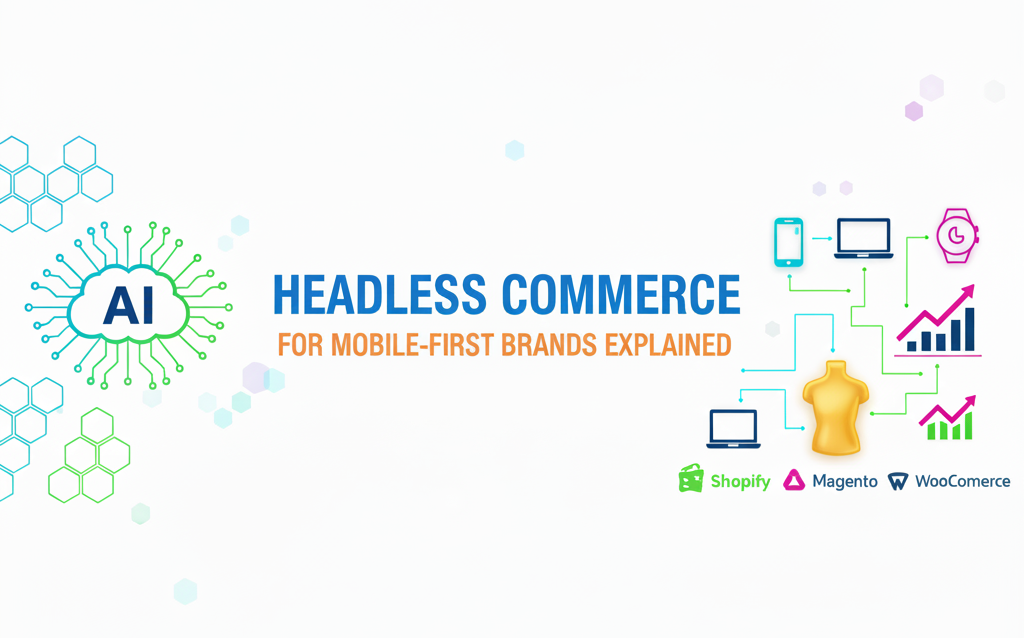
These two components of headless commerce for mobile first brands operate independently but are linked by APIs. This allows marketers to create mobile experiences with complete flexibility without altering the main system.
Faster updates and improved mobile device performance are made possible by this configuration.
Why Mobile First Brands Need Headless Commerce
Mobile-first brands prioritize phone users above desktop users. These brands require quickness, adaptability, and seamless navigation.
Mobile performance may be slowed down by traditional platforms. They restrict design modifications as well. Headless commerce for mobile-first brands is growing in popularity for this reason.
Custom mobile applications, quick websites, and even smart device experiences may be created by businesses using headless commerce. This is all controlled by a single backend system.
Mobile customers anticipate simple checkout and fast loading times. This demand is nicely served by headless commerce.
How Headless Commerce Works
All business logic in headless commerce for mobile-first firms is stored in the backend. Products, costs, and orders are all included in this.
APIs are used by the frontend to retrieve data from the backend. This enables developers to make advantage of contemporary tools such as mobile frameworks or React.
This configuration means that design modifications have no impact on the backend. Without disrupting the system, brands may enhance mobile layouts.
Development is quicker and safer as a result.
Benefits of Headless Commerce for Mobile First Brands
Headless commerce for mobile first brands has several advantages, including speed. Because mobile pages are designed specifically for mobile devices, they load more quickly.
Flexibility is an additional advantage. Without platform restrictions, brands may create distinctive mobile layouts.
Scalability is crucial as well. With traffic and sales, headless systems expand with ease.
Additionally, security gets better. While frontends are allowed to change, the backend remains secure.
Brands can maintain their competitiveness in mobile shopping thanks to all of these advantages.
Better Mobile User Experience
When it comes to mobile buying, user experience is crucial. Clean design and quick reaction are essential for small displays.
Smooth scrolling, quick loading, and improved navigation are all made possible by headless commerce for mobile first brands.
It gets simpler to check out. Pages react more quickly. Cart abandonment is decreased as a result.
Satisfied customers stay longer and make more purchases.
Faster Performance on Mobile Devices
Speed is a key ranking factor for search engines. Slow mobile sites lose traffic.
With Headless commerce for mobile first brands, developers use lightweight frontends. This reduces load time.
Images load faster. Pages respond instantly. This improves SEO and user satisfaction.
Fast performance also helps during sales and traffic spikes.
Easy Integration with Mobile Apps
Nowadays, a lot of firms employ mobile applications rather than websites. This is easily supported by headless commerce.
Mobile apps and webpages can be powered by the same backend. Time and money are saved in this way.
For companies that prioritize mobile, headless commerce enables them to control every sales channel from a single system.
Everywhere, this results in a uniform shopping experience.
Headless Commerce vs Traditional Commerce
Frontend and backend are closely linked in traditional commerce. This restricts adaptability.
Headless commerce, on the other hand, distinguishes mobile-first brands. Faster innovation is made possible by this.
Updating traditional systems is more difficult. Scaling headless systems is simpler.
Headless commerce is a better option for mobile-focused firms.
Challenges of Headless Commerce
Headless commerce is powerful, but it has challenges.
It needs skilled developers. Setup can be complex at first.
Costs may be higher compared to basic platforms. However, long-term benefits often outweigh costs.
Mobile first brands that plan growth usually find Headless commerce for mobile first brands worth the effort.
Popular Use Cases for Mobile First Brands
Many modern brands use headless commerce for mobile stores.
Fashion brands use it for fast mobile catalogs.
Food delivery brands use it for mobile apps.
Subscription brands use it for smooth recurring payments.
All these brands rely on Headless commerce for mobile first brands to deliver fast experiences.
How Headless Commerce Supports Omnichannel Selling
Consumers now shop using smart gadgets, tablets, phones, and applications.
All of these channels are supported by headless commerce from a single backend.
For companies who prioritize mobile, this is a significant benefit of headless commerce.
Without revamping the system, brands may introduce new platforms.
Is Headless Commerce Right for Every Brand
Not all brands require headless commerce.
Traditional platforms may be the first choice for small businesses with basic requirements.
However, expanding mobile-focused firms stand to gain the most.
Headless commerce for mobile first brands is a good option if speed, design freedom, and scalability are important.
FAQs
What is headless commerce in simple words
Headless commerce separates the frontend from the backend. This allows flexible and fast design, especially for mobile.
Why is headless commerce good for mobile first brands
Because it improves speed, design freedom, and mobile user experience.
Is headless commerce expensive
Initial cost can be higher, but long-term growth and performance benefits are strong.
Can headless commerce work with mobile apps
Yes. It works very well with mobile apps and websites using one backend.
Do small brands need headless commerce
Not always. But growing mobile brands gain more value from it.
Final Thought
Mobile shopping is the future. Brands that focus on mobile users must adopt modern solutions.
Headless commerce for mobile first brands offers speed, flexibility, and better user experience. It allows brands to grow without limits.
While setup needs planning, the long-term benefits are strong. For mobile focused growth, headless commerce is a smart move.