
Introduction
Choosing between Zendrop vs Spocket shouldn’t take this long. But here you are, three tabs open, reading the same recycled reviews that don’t actually help you decide.
Most comparisons just list features. They don’t tell you what breaks, what costs more than it should, or which platform actually ships on time. That’s why you’re still stuck.
This article cuts through all of that. You’ll get a real, direct comparison based on what matters to dropshippers running actual stores. Pricing, suppliers, shipping speeds, product quality — all of it. By the end, you’ll know exactly which dropshipping platform fits your store and why.
Quick Answer: Zendrop vs Spocket comes down to your product niche and budget. Zendrop is better for fast-shipping general products with automation. Spocket is better for premium, branded products from closer suppliers. Most dropshippers see better results when they match the platform to their niche first, then test with real orders before scaling.
1. What’s the Real Difference Between Zendrop and Spocket?
PROBLEM: You read the feature pages on both sites. They sound almost identical. So you can’t tell which one is actually different in a way that matters.
WHY: Both platforms market themselves to the same audience using the same language. “Fast shipping.” “Quality suppliers.” “Easy integration.” It’s all vague until you dig into the real mechanics.
FIX: Here’s the actual difference in plain terms.
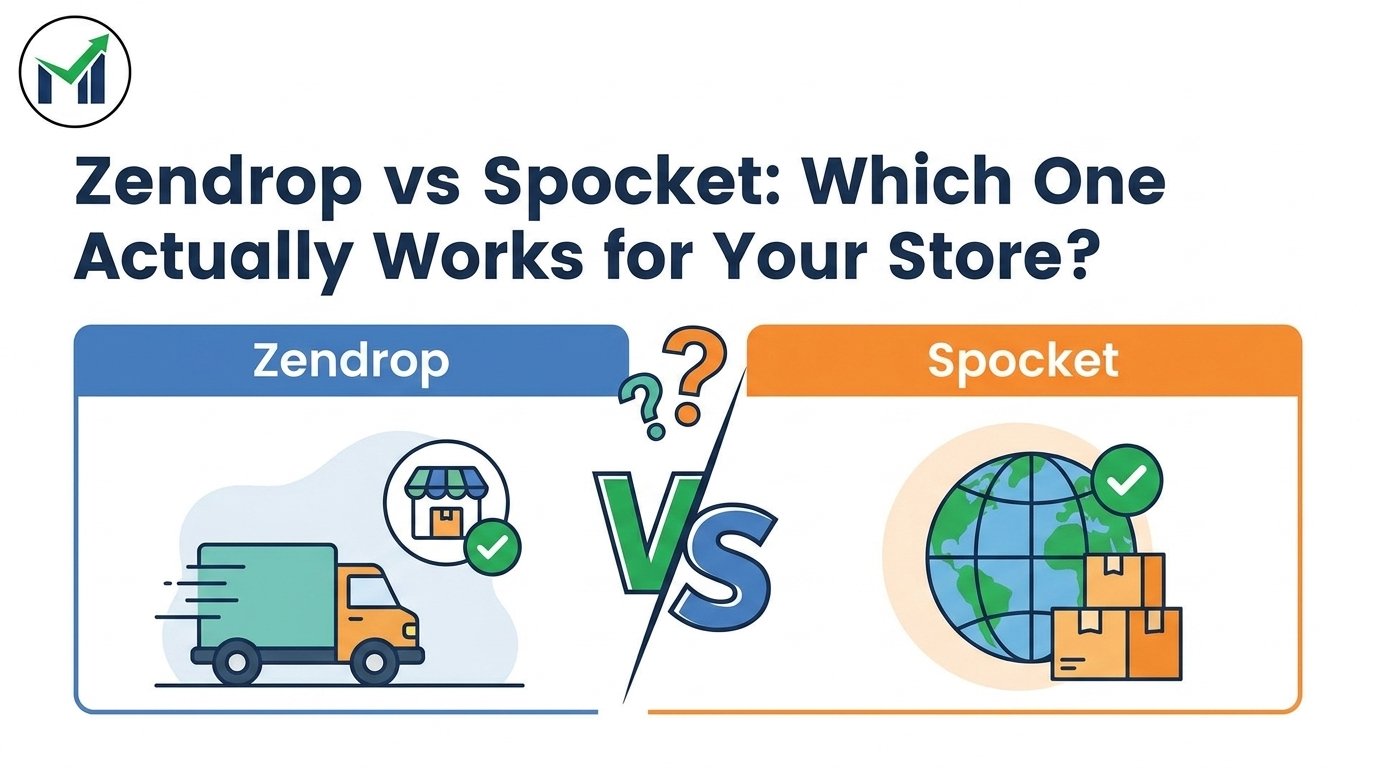
Zendrop was built around speed and automation. Its supplier network leans heavily on fulfillment centers that move fast. It’s designed so you can run a store with minimal manual work. The platform handles order routing, tracking updates, and even custom packaging on higher plans.
Spocket was built around product quality and supplier location. Its main selling point is that many of its suppliers are based closer to Western markets. That means shorter shipping routes for a big chunk of their catalog. Spocket also lets brands put their logo on packaging, which matters if you’re building something more than a generic store.
| Feature | Zendrop | Spocket |
|---|---|---|
| Main focus | Speed + automation | Quality + branding |
| Supplier location | Mixed, fast fulfillment | Closer to Western markets |
| Custom packaging | Yes (Pro/Plus plans) | Yes (higher plans) |
| Free plan available | Yes | Yes (very limited) |
| Best for | General niches, volume | Premium/branded stores |
RESULT: Once you understand what each platform was built for, the choice gets a lot clearer.
2. Zendrop vs Spocket Pricing: What You Actually Pay
PROBLEM: You signed up for the free plan and immediately hit a wall. The features you actually need are locked behind a paid tier, and you’re not sure if it’s worth it.
WHY: Both platforms use freemium models designed to get you in the door, then nudge you toward paid plans once you start selling. The free plans work, but they’re limited in ways that cost you more time than money.
FIX: Here’s what each plan actually includes.
Zendrop Pricing:
- Free: 10,000+ products, basic features, limited orders
- Pro ($49/month): Unlimited orders, faster fulfillment, custom branding
- Plus ($79/month): Everything in Pro plus a product sourcing service
Spocket Pricing:
- Free: Browse only, no real selling features
- Starter ($39.99/month): Up to 25 products
- Pro ($59.99/month): Up to 250 products, branded invoicing
- Empire ($99.99/month): Unlimited products, full features
💡 Pro Tip: Spocket’s free plan doesn’t let you import products to your store. Zendrop’s free plan does. If you’re just starting out with no revenue yet, Zendrop gives you more room to test before paying.
RESULT: If budget is tight and you’re still testing, Zendrop’s free plan gets you further. If you’re ready to invest and want branded product experiences, Spocket’s Pro plan delivers more perceived value per product.
3. Supplier Quality and Product Range: Who Wins?
PROBLEM: You found a product that looked great in the listing. Then your customer received something that looked nothing like the photo. Now you have a refund request and a one-star review.
WHY: Product quality on dropshipping platforms depends entirely on which suppliers they vet and how strictly. Not every platform has the same standards.
FIX: Here’s how both handle supplier quality.
Zendrop has a large catalog with over 1 million products. The range is massive, which is great for testing. But with volume comes variance. Some suppliers are excellent. Some are inconsistent. Zendrop does offer a product sourcing service on higher plans where their team finds specific products for you, which helps cut through the noise.
Spocket is more selective. They manually vet suppliers and focus heavily on product quality. Their catalog is smaller but tighter. If you’re selling in niches like home decor, fashion, or beauty, Spocket’s curation is a real advantage. You’re less likely to get a surprise when your customer opens the package.
- Want huge variety to test multiple niches? Zendrop wins.
- Want fewer products but higher consistency? Spocket wins.
⚠️ Warning: Always order samples before you scale any product, regardless of platform. Reviews in the app mean nothing if you haven’t held the product yourself.
RESULT: Spocket gives you more confidence in product quality. Zendrop gives you more options to find winning products fast.
4. Shipping Speed: Which Platform Gets Orders There Faster?
PROBLEM: Your customer placed an order two weeks ago and is still waiting. They’re emailing you every day. You have no real answer.
WHY: Shipping speed depends on where the supplier is, where the customer is, and how the platform routes the order. Many dropshippers pick products without checking fulfillment locations first.
FIX: Here’s what you need to know about each platform’s shipping reality.
Zendrop ships many products from fulfillment centers set up specifically for fast delivery. Their top products often ship within 5 to 10 business days. They also offer a US-warehouse option for certain products, which can cut that down significantly.
Spocket routes orders through suppliers who are physically closer to Western markets for a large portion of their catalog. Many of their products ship in 3 to 7 business days. That’s genuinely fast for dropshipping.
| Shipping Speed | Zendrop | Spocket |
|---|---|---|
| Average delivery time | 5-10 business days | 3-7 business days |
| Domestic warehouse option | Yes (select products) | Yes (many suppliers) |
| Tracking updates | Automated | Automated |
RESULT: Spocket generally wins on shipping speed for Western customers, but only on products sourced from nearby suppliers. Always check the supplier location before adding a product to your store.
5. Automation and Store Integration: Which is Easier to Run?
PROBLEM: You’re manually copying order details, pasting tracking numbers, and checking supplier sites just to fulfill one order. It’s eating your entire day.
WHY: Not every dropshipping app automates the same things. Some platforms handle the whole fulfillment pipeline. Others leave gaps you have to fill yourself.
FIX: Here’s how both platforms handle automation.
Zendrop was built with automation at its core. Once you connect your store, orders that come in get routed to suppliers automatically. Tracking updates push to your customers without you touching anything. On the Pro plan, you also get automated fulfillment so you genuinely don’t have to log in for every order.
Spocket also automates order fulfillment, but the experience depends more on the individual supplier. Most work smoothly. A few require you to check in manually for certain product types. Their Shopify integration is clean and reliable.
Both platforms integrate with:
- Shopify
- WooCommerce
- Wix (Zendrop also supports BigCommerce)
💡 Pro Tip: Set up automated email tracking notifications for your customers from day one. Both platforms send tracking data, but your store should be the one sending those emails. It builds trust and cuts down on “where’s my order” messages.
RESULT: Zendrop edges ahead on pure automation depth. Spocket is close, but Zendrop’s pipeline feels more hands-off once it’s set up.
6. When Zendrop Works Better (And When It Doesn’t)
PROBLEM: You chose Zendrop but you’re not getting the results you expected. Orders are coming in, but margins are thin and products feel generic.
WHY: Zendrop works best in specific situations. Using it outside those situations gives you average results at best.
FIX: Use Zendrop when:
- You’re testing multiple products fast and need volume
- You want a mostly automated store with minimal daily management
- You’re in general niches like gadgets, pet products, or home essentials
- You need the product sourcing service to find unique items
Don’t use Zendrop when:
- You’re building a premium brand with high-end products
- Supplier location matters a lot for your niche
- You want a small, curated catalog with consistent quality
RESULT: Zendrop works best as a testing and scaling machine. If that’s your model, it delivers. If you’re building something premium and slow, it’s not the right tool.
7. When Spocket Works Better (And When It Doesn’t)
PROBLEM: You picked Spocket expecting a huge product range and found the catalog smaller than you thought. Now you’re wondering if you made the wrong call.
WHY: Spocket trades volume for quality. That’s intentional. If you came in expecting a massive catalog, it feels limiting.
FIX: Use Spocket when:
- Your niche is fashion, beauty, home decor, or lifestyle products
- You’re building a brand and want branded invoicing and packaging
- Fast shipping is non-negotiable for your customers
- You want a curated catalog you can trust
Don’t use Spocket when:
- You need to test dozens of products quickly
- Your budget is tight and you can’t afford the paid tiers
- You need a very wide product range in tech or gadget niches
Bigcommerce vs Woocommerce which is better
RESULT: Spocket delivers when you know your niche, you have a brand direction, and you’re ready to invest in a slightly higher plan.
FAQ
Which is better for beginners, Zendrop or Spocket?
Zendrop is generally easier for beginners. Its free plan lets you import products right away and test before you pay. Spocket’s free plan only lets you browse. If you’re just starting out with zero revenue, Zendrop gives you more room to learn without spending money upfront.
Why is Spocket more expensive than Zendrop?
Spocket’s pricing reflects their supplier curation model. They manually vet suppliers and keep quality standards higher, which costs more to maintain. You’re paying for fewer but more reliable products. If product quality matters more than volume, the higher price makes sense.
Can I use both Zendrop and Spocket at the same time?
Yes. Some dropshippers run both. They use Spocket for their main premium products and Zendrop for supplementary items or faster testing. The challenge is managing two platforms and keeping your store organized. It’s doable, but start with one until you’re comfortable.
Why are my Zendrop shipping times longer than advertised?
This usually means the product you chose doesn’t ship from a fast fulfillment center. Check the product’s shipping origin in the listing. Products with longer estimated times ship from overseas suppliers. Filter for products with faster delivery options or check Zendrop’s US warehouse catalog.
Does Spocket work with WooCommerce?
Yes. Spocket integrates with both Shopify and WooCommerce. The setup is straightforward. Go to the Spocket dashboard, connect your WooCommerce store, and your imported products sync automatically. Some users report minor sync delays, but these usually resolve within a few hours.
What causes poor product quality on these platforms?
Neither platform manufactures products. They connect you to third-party suppliers. Quality depends on the individual supplier. The fix is always the same: order a sample before you sell. One $15 sample order can save you dozens of refunds and bad reviews later.
Is Zendrop or Spocket better for branded dropshipping?
Spocket has a slight edge here. Their branded invoicing feature and supplier relationships lean more toward building a consistent brand experience. Zendrop does offer custom packaging on higher plans, but Spocket’s overall supplier quality makes it easier to build something that feels premium.
Conclusion
The Zendrop vs Spocket debate doesn’t have one universal winner. It depends on what your store actually needs.
If you want speed, automation, and a huge product range to test fast, Zendrop is your platform. If you want quality, closer suppliers, and a more premium product experience, Spocket fits better.
The most important fix most dropshippers skip: order samples before you scale anything. It doesn’t matter which platform you choose. If you haven’t held the product, you don’t know what your customer is getting.
Pick the platform that matches your niche. Test with real orders. Then scale what works. That’s the whole playbook.